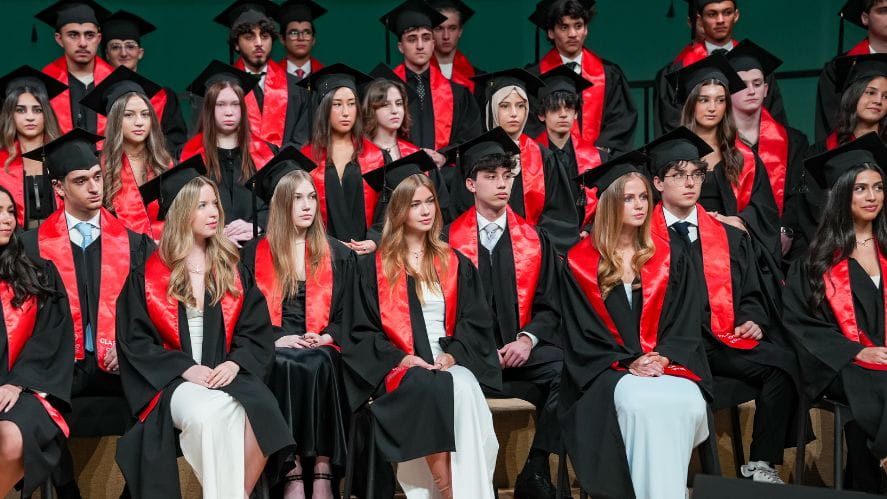
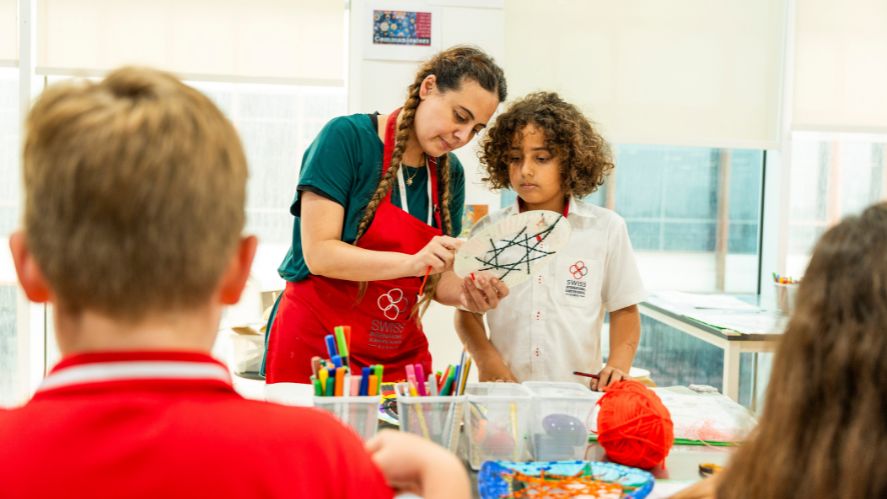
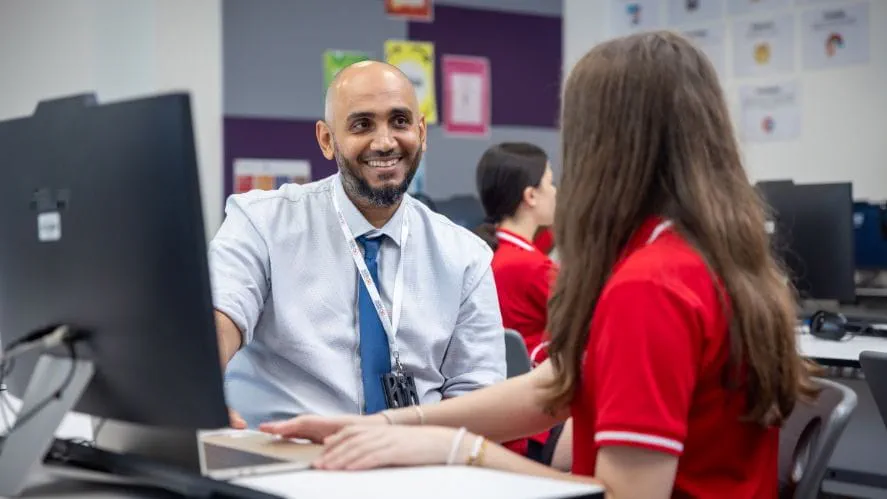
At SISD, bilingual education goes beyond language learning. Students study in English and French or German, building academic fluency and confidence for university and beyond.
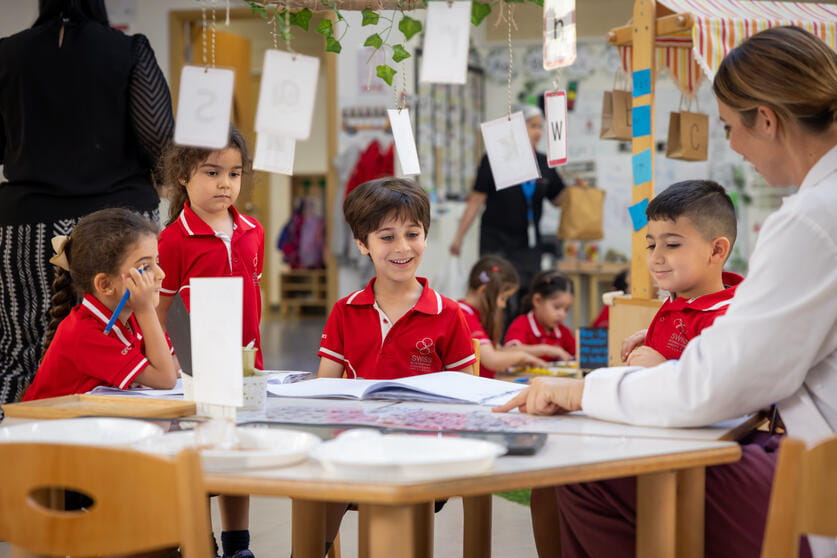
At Swiss International Scientific School Dubai (SISD), both bilingual pathways sit within a wider International Baccalaureate (IB) education. Students are supported to develop strong academic foundations, linguistic confidence and the ability to move naturally between cultures. For families considering SISD, the decision is therefore less about which language is “better” and more about which pathway feels most aligned with your child, your family context and the future you are helping them prepare for.
| Pathway | Particularly relevant for | Future-facing strengths |
|---|---|---|
| English-French | Families connected to France, French-speaking Switzerland, Canada or wider French-speaking communities | International relations, hospitality, global organisations, diplomacy, culture and international mobility |
| English-German | Families connected to German-speaking Switzerland, Germany, Austria or wider German-speaking Europe | Engineering, science, technology, finance, research, innovation and European business |
| Both pathways | Internationally minded families seeking bilingual education within the IB framework | Academic confidence, intercultural understanding, international university preparation and global adaptability |
A bilingual pathway shapes far more than a child’s weekly language lessons. When language is embedded into a student’s education, it becomes part of how they learn, communicate, collaborate and understand the world around them.
For children growing up in an international environment, this can be particularly powerful. Many students at SISD are part of globally mobile families. They may have lived in more than one country already, speak more than one language at home, or expect to study and work across different regions in the future. A bilingual education helps give structure to that international experience.
The right language pathway can support academic progress, but it can also help children build confidence in unfamiliar settings. It can make future transitions feel more natural, whether that means moving to another school, applying to university abroad, or living and working in a multilingual environment later in life.
Within the International Baccalaureate framework, bilingual learning also supports the wider aim of developing internationally minded students. Language is not treated simply as a subject to be studied, but as a way of understanding different perspectives, cultures and communities.
SISD offers two main bilingual education options: English-French and English-German. Both are designed to help students develop strong academic English alongside sustained development in a second language.
Each bilingual track gives students a clear language focus while keeping English as a strong academic foundation. This helps families considering SISD choose a route that reflects their child’s background, interests and possible future destinations, without narrowing their wider international opportunities.
Both routes sit within SISD’s wider multilingual environment, so the decision is less about choosing the “stronger” language and more about selecting the bilingual track that best fits your child’s background, interests and future possibilities.
English-French is a strong fit for families with connections to French-speaking countries, students who may later study or work in francophone environments, and parents who want their child to develop confidence in one of the world’s major international languages.
French is one of the most widely spoken languages in the world and is the national language of 29 different countries. It has long been associated with international diplomacy, culture, education and global institutions. For students who may later consider studying or working in French-speaking regions, early and sustained exposure can provide a meaningful advantage.
This pathway may also be a natural fit for families with French as a home language, a heritage language, or a language connected to future relocation plans. It can also provide continuity for students who have already encountered French through previous schooling, family background or early years education.
English-German is a strong fit for families connected to German-speaking Europe, students who may later consider study or work in Switzerland, Germany or Austria, and children whose interests may develop towards science, engineering, technology, finance or business.
German has particular relevance in academic and professional contexts linked to innovation, research and industry. Germany and Switzerland are both associated with engineering, advanced manufacturing, pharmaceuticals, finance, technology and scientific research, giving the language clear value for students who may later move towards these fields.
This bilingual track can also support families who expect to relocate to a German-speaking country, return to Switzerland, or keep future European study options open. For children who may one day live, study or work in these environments, confidence with the language can make future transitions feel more familiar and manageable.
As with the English-French pathway, the decision should not rest only on career predictions. A young child’s interests will naturally evolve. However, where German aligns with a family’s background, future plans or a child’s emerging academic strengths, it can be a highly relevant choice.
German can also appeal to students who enjoy structure, logic and precision in language learning. Every child learns differently, but some students respond well to the patterns and systems within the language.
University ambitions can help guide your decision, particularly if you are considering European, Swiss, Canadian, UK or wider international higher education. However, they should not be the only factor.
For younger children, it is rarely possible to know exactly where they will want to study in ten years’ time. Their interests, strengths and ambitions will develop as they move through school. What matters most is choosing a pathway that keeps their opportunities open, builds their confidence and supports sustained academic progress.
Bilingual education can strengthen a student’s profile by showing adaptability, commitment and cultural awareness. It can help students feel more comfortable in international university environments, where they may study alongside peers from many different countries and backgrounds.
For families already considering specific destinations, language choice might be more strategic. A child who may study in Switzerland, France or French-speaking Canada may benefit from the English-French pathway. A child who may study in Switzerland, Germany or Austria may benefit from the English-German pathway.
That said, the strongest pathway is usually the one the student can engage with meaningfully over time. Enjoyment, confidence and consistency all matter. A language that aligns with the child’s interests and family context is more likely to become a genuine strength, rather than simply another academic requirement.
For families who move internationally, future location is often one of the clearest ways to choose between English-French and English-German.
If your family is likely to spend time in France, French-speaking Switzerland, Canada or another French-speaking environment, English-French may offer stronger long-term continuity. If your family has links to German-speaking Switzerland, Germany or Austria, English-German may provide a more practical foundation.
For families without a fixed relocation plan, the decision can still be strategic. Both bilingual tracks support international adaptability, but the best choice is usually the one that connects most naturally with your child’s existing experience, interests and likely future environments.
It is completely normal for parents to feel uncertain, especially if both pathways seem appealing.
A useful starting point is to think about your child’s current experience with language. Have they already been exposed to French or German? Do they show interest in one more than the other? Is one language already part of your family’s culture, heritage or future plans?
It can also help to think about your child’s personality and learning style. Some children are drawn to the sound, rhythm and cultural familiarity of French. Others may enjoy the structure and logic often associated with German. These impressions do not need to be decisive, but they can form part of a broader conversation.
You may want to ask:
The aim is not to predict every step of your child’s future. It is to choose the pathway that gives them the strongest combination of confidence, relevance and opportunity.
At SISD, bilingual education is supported through a structured approach to language development. Students are not only introduced to French or German as standalone subjects; they are supported to use language as part of a wider learning experience, building confidence across speaking, listening, reading and writing.
This approach matters because bilingual learning develops over time. Children need consistent exposure, clear progression and teachers who understand how students acquire and use more than one language. Within SISD’s IB environment, language learning is connected to inquiry, communication and intercultural understanding.
The school’s multilingual community also plays an important role. Students hear and use different languages in an international setting, helping them see bilingualism as part of everyday life rather than a separate academic task.
Deciding between English-French and English-German bilingual education is a meaningful step, but it does not need to feel overwhelming.
Both pathways can support a child’s academic development, international outlook and future mobility. The right choice will depend on your child’s current language experience, your family’s cultural connections, possible university destinations and the regions where your child may one day study, work or settle.
For some families, English-French will feel like the most natural fit. For others, English-German will align more closely with future plans. In both cases, the value lies in giving students the confidence to think, learn and communicate across more than one language and culture.
At SISD, bilingual education is part of a wider commitment to helping students become confident, internationally minded learners. Whether a child follows the English-French or English-German pathway, the aim is to prepare them not only for school, but for the global opportunities that may come next.
If you would like to discuss your child’s options and the best path for them, or to book a tour of our world-class campus in Dubai, speak to our admissions team today.
No. Both pathways offer strong academic and international value. The right choice depends on your child’s language background, family context and possible future destinations.
University plans can help guide the decision, especially if your family is already considering Switzerland, France, Germany, Austria, Canada, the UK or wider international higher education. However, the most suitable pathway is usually the one your child can engage with confidently over time.
Previous exposure can be helpful, but it is not the only factor. SISD supports students through structured language development, clear progression and an international school environment where multilingual learning is part of everyday life.
Yes. Many families choose bilingual education to keep future options open. Both English-French and English-German can support international mobility, academic confidence and cross-cultural communication.